
Abu Dhabi’s Crypto Blueprint Draws Miners, Funds and Global Giants


Key Takeaways
- Citadel Mining holds about 6,996 BTC built through Abu Dhabi mining operations since 2022.
- Mubadala raised its Blackrock IBIT stake 16% to 14.7 million shares in Q1 2026.
- The FSRA’s stablecoin framework and farm-mining rules will shape ADGM growth through 2026.
Regulators Write the Rulebook Early
The emirate’s Financial Services Regulatory Authority, or FSRA, has licensed virtual asset activity since 2018 through the Abu Dhabi Global Market, a financial free zone with its own courts built on English common law. That early start gave firms a rulebook years before many other jurisdictions caught up.
Not every virtual asset qualifies. Firms need a Financial Services Permission before they can operate, and only assets the FSRA labels “Accepted Virtual Assets” can move through regulated products. Privacy tokens and algorithmic stablecoins are barred outright. Capital requirements scale with the size and type of a firm’s business, and a Reglab sandbox lets startups test products under supervision before they go live.
Major Crypto Platforms Secure Licenses
Binance holds the clearest example of what that approval process delivers. The exchange secured full ADGM approvals covering trading, clearing and brokerage, all run through separate Nest-branded entities. Galaxy Digital opened an ADGM office. The financial giant BNY is building toward regulated custody for bitcoin and ethereum with local partners. Circle and other stablecoin firms picked up permissions of their own, and regulators recognized Tether’s USDT as an accepted asset for licensed platforms to use. A Fiat-Referenced Token framework, refined through 2025 and taking fuller effect in 2026, now gives regulated stablecoin issuers a path to operate inside the zone.
Tax Breaks Pull Founders Into the Zone
Money moves where rules are clear, and Abu Dhabi’s free zones back that clarity with tax breaks. Qualifying income inside the zones carries a 0% corporate tax rate, individuals generally owe no personal income or capital gains tax, and foreign founders can own their companies outright. Golden Visas give executives and skilled workers a reason to relocate rather than commute in from elsewhere.
Hub71 Channels Sovereign Money to Startups
Sovereign capital gives the emirate an edge most financial centers cannot match. Mubadala Investment Company, which manages hundreds of billions of dollars, backs Hub71, the government-linked startup accelerator that runs a dedicated digital assets track. Hub71 has pulled in dozens of blockchain and fintech startups, connecting them to funding and to regulators in the same building. The Blockchain Center Abu Dhabi adds another layer, working on adoption projects that include AE Coin, the UAE’s regulated dirham-linked stablecoin effort, while Avalanche’s DLT Foundation uses its ADGM base to build partnerships across the wider Middle East and North Africa region.
Citadel Mining Stacks Nearly 7,000 BTC
Bitcoin mining shows the same pattern on an industrial scale. Citadel Mining, tied to Abu Dhabi’s Royal Group through International Holding Company, started large operations around 2022, including facilities on Al Reem Island. Current Arkham Intelligence data puts Citadel Mining’s holdings near 6,996.55718089 BTC, worth roughly $451.05 million at the exchange rate used in that analysis. The firm built most of that stack by mining coins rather than buying them, and it has kept the bulk of what it produced instead of selling.
Publicly-traded bitcoin miner MARA Digital has partnered with Abu Dhabi-linked Zero Two on immersion-cooled mining capacity, while Phoenix Group and NIP Group have expanded hashrate alongside hybrid compute that can shift toward AI workloads. Authorities have banned mining on agricultural land to protect farming use, with penalties for violators, pushing operators toward designated industrial and free-zone sites instead.
Mubadala Raises Its Bitcoin ETF Bet
Abu Dhabi’s sovereign wealth funds have taken a second path into Bitcoin, buying regulated exposure through Blackrock’s spot ETF, IBIT, rather than holding coins directly. Mubadala Investment Company reported about 12.7 million IBIT shares at the end of 2025, worth close to $631 million at the time. By the first quarter of 2026, the fund had raised its position 16% to roughly 14.7 million shares, valued at nearly $566 million as the share price moved.
Al Warda Investments, linked to the Abu Dhabi Investment Council within the wider Mubadala structure, held about 8.2 million IBIT shares at the end of 2025, worth close to $408 million. Combined, the two funds’ IBIT positions topped $1 billion at year-end 2025 prices. Both holdings show up in public U.S. SEC 13F filings, giving outside analysts a rare window into how sovereign money treats Bitcoin as a portfolio asset rather than a side bet.
Tokenization Draws Sovereign Capital Onchain
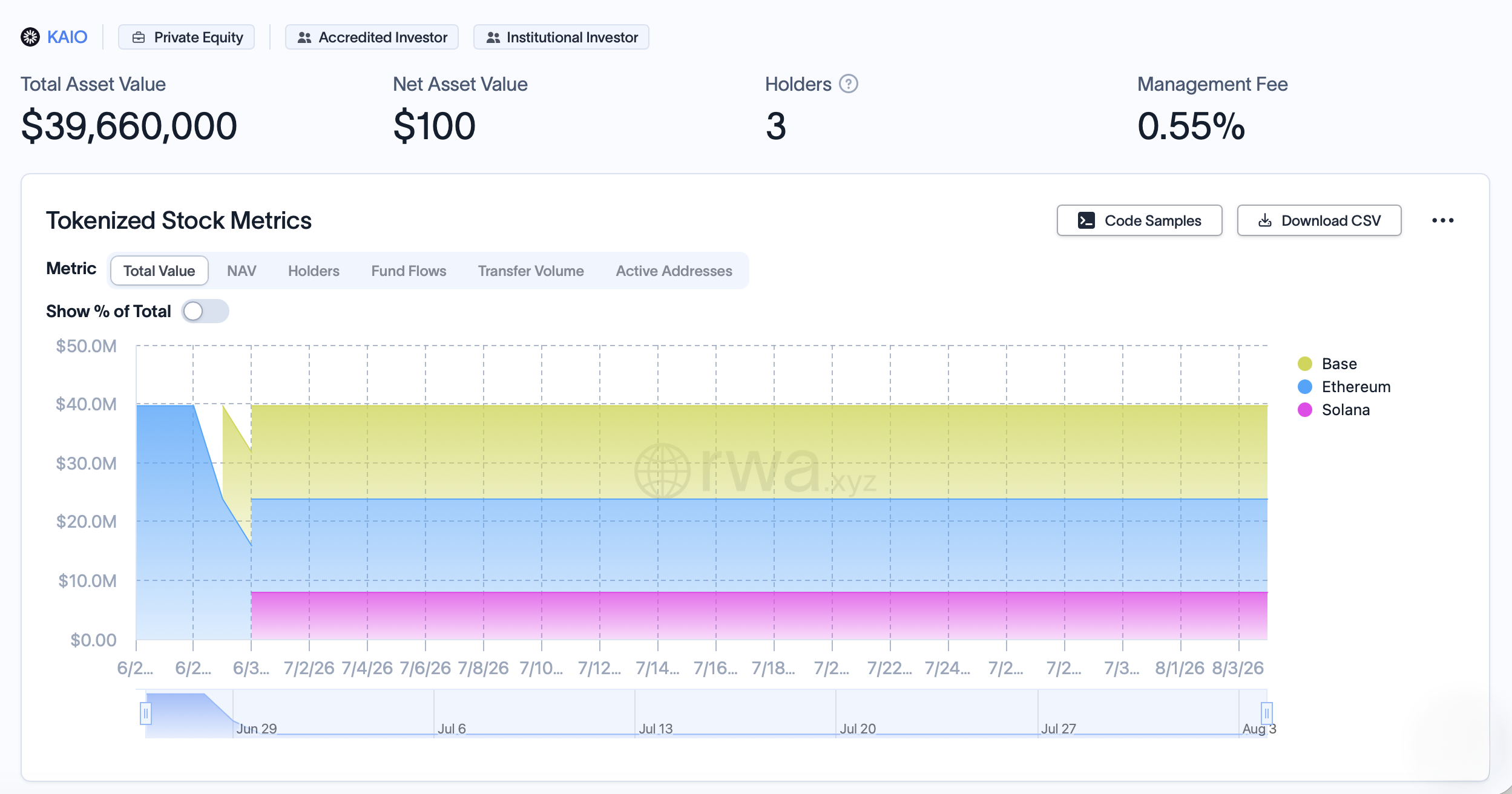
Mubadala Capital, the alternative investment arm connected to the sovereign fund, has pushed further into tokenization. It partnered with KAIO to bring its Alternative Solutions Fund onchain across the Base, Solana and Sui networks. The tokenized product drew about $75 million onchain around its key announcement points, and Coinbase took a balance-sheet position in it, linking a sovereign-backed fund directly to crypto infrastructure most retail investors already use. Total asset value (TVL), according to rwa.xyz stats on Aug. 5, stands at $39.66 million.
The same appetite shows up in smaller, faster-moving deals across the emirate. Family offices and special purpose vehicles registered in ADGM have grown alongside venture allocations into Web3 projects, stablecoin settlement tests, and cross-border payment corridors that link the UAE to African markets through efforts like the ADI Foundation’s ADI Chain. Tokenized real-world asset platforms have multiplied too, letting investors buy fractional stakes in property, credit, and other assets that once required far larger checks.
Competing Free Zones Keep Pressure On
None of this runs through a single government office. Multiple free zones, including Dubai’s VARA framework alongside ADGM, compete for the same firms, and that competition keeps pushing the rules toward more clarity rather than less. Exchanges, custodians, miners, and startups pick locations and structures based on cost and regulation, not central instruction.
Readers should watch how the Fiat-Referenced Token framework develops through 2026, since it will decide how far regulated stablecoin issuance can grow inside ADGM. Mubadala’s next 13F filing will show whether its IBIT position keeps climbing, and any update on the farm-mining ban could signal how much room miners have left to expand inside the emirate.


